
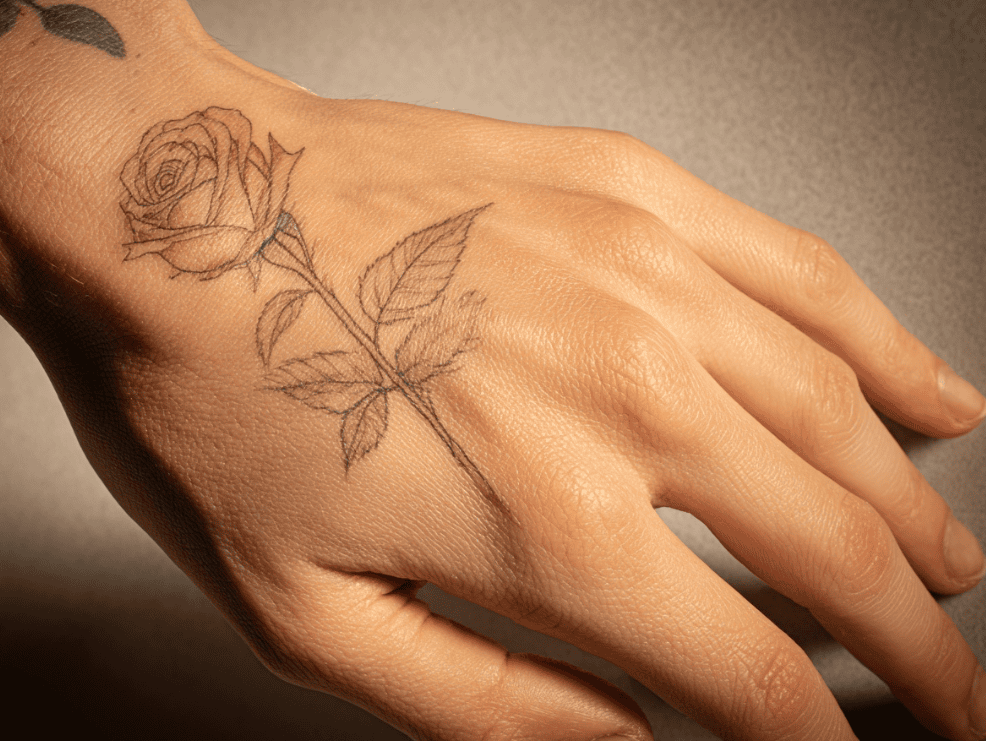
If you’ve ever had a laser tattoo removal session and noticed your once-black tattoo looking brownish afterward… don’t stress. It’s not a sign that something went wrong. In fact, that colour shift is a completely normal part of the removal process — and a sign that your body is doing exactly what it should.
At Velverra, we love helping clients understand why their skin behaves the way it does during healing, because the more you know, the smoother your journey (and your results!) will be. So let’s break down what’s actually happening when black ink fades into brown.
Why Black Ink Sometimes Turns Brown After Laser Treatment
1. The Laser Breaks Ink Into Tiny Particles
Laser tattoo removal works by targeting the ink particles with specific wavelengths of light. Black ink absorbs the laser energy extremely well, which is why it’s the easiest colour to remove.
When the laser hits the ink, it shatters the pigment into smaller pieces. These fragments rise closer to the surface before your lymphatic system clears them away.
During this stage, the pigment can appear lighter, warmer, or even brownish.
2. Oxidation — The Main Reason for the Brown Colour
Once the pigment is broken down, it reacts with oxygen in the skin. This chemical reaction is called oxidation, and it can temporarily change the colour of the ink.
Just like a sliced apple turning brown, broken pigment can oxidise and shift from black → brown → eventually lighter tones.
This is especially common in:
Black tattoos with low-quality pigment
Tattoos that contain filler colours or additives
Old or faded tattoos already leaning towards a brown tone
3. The Body Is Processing the Pigment
As your immune system begins clearing the shattered ink particles, the colour will shift again. Brown can turn:
Greyish
Light brown
Patchy
Or noticeably faded
This is your lymphatic system doing the heavy lifting — and it’s a sign that the removal process is active.
4. Scabbing or Micro-Crusting Can Look Brown Too
Some people develop tiny dry spots or micro-crusting after treatment. These can also appear brownish and can easily be mistaken for the actual ink colour.
This is normal and part of the natural healing cycle.
What Happens Next?
As your skin heals over the next 6–12 weeks, the brown hue will continue to lighten. Every session reduces pigment density, and the brown phase usually disappears well before your next appointment.
The process looks like:
Laser session
Ink breaks apart
Oxidation → brownish tint
Immune response → clearer skin
Progressive fading over weeks
How Velverra Helps You Through This Stage
At Velverra, we tailor your aftercare so your skin heals cleanly with minimal inflammation. Proper skincare can reduce the intensity of temporary colour changes and keep your skin hydrated and protected.
Aftercare we usually recommend:
Cooling the area initially
Gentle soothing gels (aloe, panthenol, chamomile)
Avoiding sun exposure
No picking at micro-crusting
Staying hydrated to support the lymphatic system
Final Thoughts
Black ink turning brown after laser tattoo removal isn’t a complication — it’s a natural and expected part of the process. It simply means the pigment is breaking down, oxidising, and preparing to be removed by your body.
If your tattoo is going through the “brown phase,” take it as a good sign: you’re moving one step closer to clearer skin.
If you’d like a version of this blog styled specifically for your Velerra website, with branding or service links added, I can refine it!